
Choosing the right dog bed is more than a comfort decision — it directly affects your dog's joint health, sleep quality, and overall well-being. With dozens of bed types on the market, from orthopedic memory foam to elevated cooling cots to the viral human-dog shared bed, picking the right one can feel overwhelming.
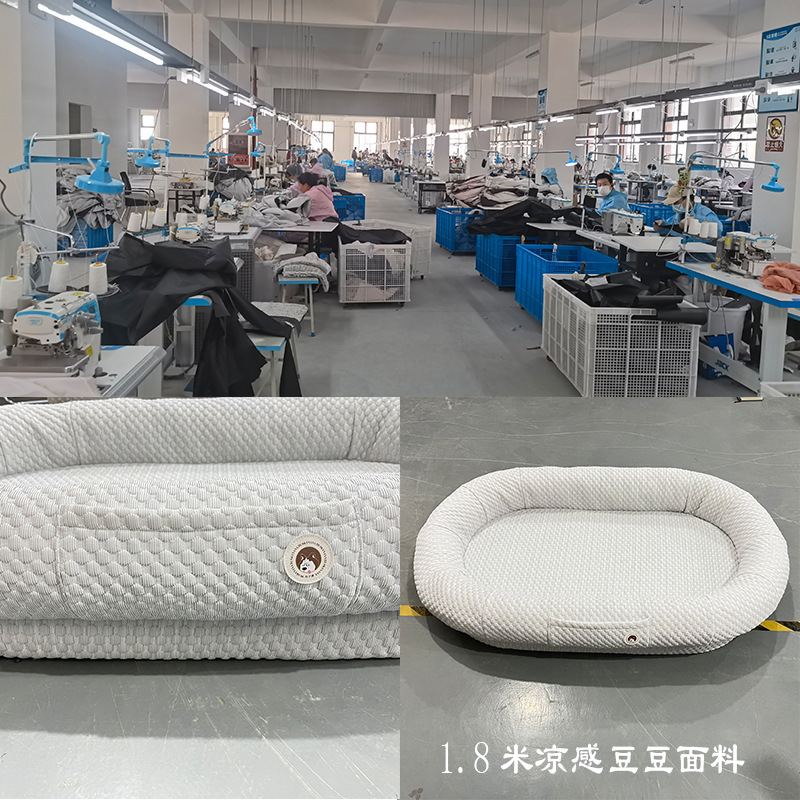
At Feitu Pet, we manufacture over 58 dog bed SKUs in our 6,000 sqm factory. We have seen what works across thousands of wholesale orders shipped to 20+ countries. This guide breaks down every dog bed type, when to use each one, and exactly how to size a bed for any breed.
The 6 Main Types of Dog Beds
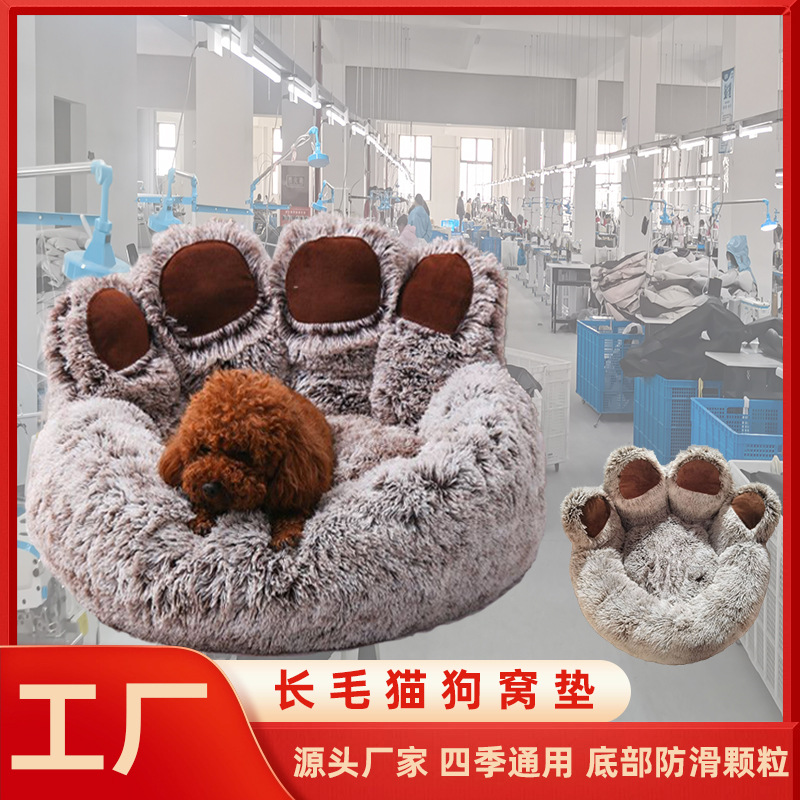
Each dog bed type serves a specific purpose. The best choice depends on your dog's size, age, health, sleeping style, and where the bed will be placed.
1. Bolster Beds (Raised-Edge Beds)
Bolster beds feature raised walls on three or four sides, creating a nest-like sleeping area. Dogs that like to rest their head on something while sleeping — a pillow, a couch arm, your leg — are natural bolster bed users.
- Best for: Dogs that curl up to sleep, dogs that like to lean against surfaces, dogs that feel more secure in enclosed spaces
- Fill options: PP cotton (budget), crushed foam (mid-range), memory foam bolster (premium)
- Key feature: The raised edges double as a head pillow — no extra pillow needed
- Our top model: Bolster Dog Bed — Enclosed Warm with full-surround raised edges, available in M/L/XL
2. Orthopedic Beds (Memory Foam / High-Density Foam)
Orthopedic beds use high-density foam or memory foam that conforms to your dog's body shape, distributing weight evenly across the sleeping surface. This reduces pressure on joints by up to 80% compared to standard cotton-filled beds.
- Best for: Senior dogs (7+ years), large breeds prone to hip dysplasia (German Shepherds, Rottweilers, Golden Retrievers), post-surgery recovery, dogs with arthritis
- Fill specs: Memory foam (density 40-60 kg/m3) or egg-crate foam (surface texture distributes pressure points)
- Key feature: Waterproof TPU inner lining protects the foam from accidents — critical since foam absorbs liquid and develops odor if unprotected
- Price difference: Orthopedic beds cost 2-3x more than PP cotton beds, but last 2-3x longer because foam retains its shape while cotton compresses flat within months
3. Calming / Donut Beds
Round beds with a raised rim all the way around, covered in deep faux fur. The enclosed shape and soft texture trigger a natural nesting instinct that reduces anxiety. These beds have become enormously popular since 2023.
- Best for: Anxious dogs, dogs with separation anxiety, rescue dogs still adjusting to a new home, small to medium breeds
- Fill: PP cotton in the base + PP cotton in the raised rim
- Key feature: Deep faux fur that dogs can burrow into — the tactile sensation is calming
- Our top model: Calming Donut Dog Bed — Faux Fur in sizes S through XL
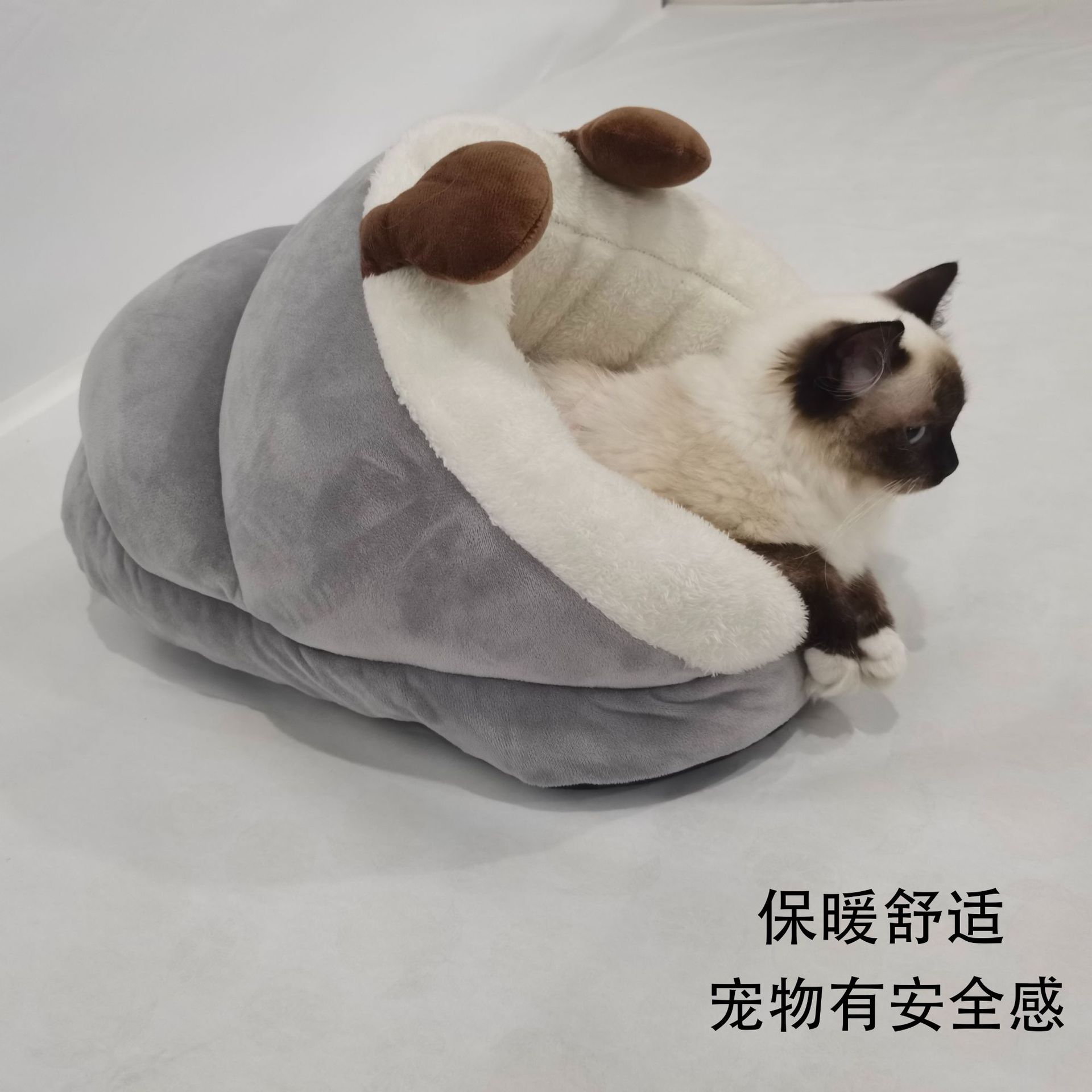
4. Cave / Hooded Beds
Cave beds are fully enclosed with an overhead canopy or hood, creating a dark, den-like space. Dogs are descended from den animals — many breeds retain a strong preference for sleeping in enclosed, covered spaces.
- Best for: Dachshunds, Chihuahuas, Whippets, Italian Greyhounds, and other breeds that love to burrow under blankets
- Construction: Typically a bolster bed base with a flexible fabric hood that can be folded back when not wanted
- Key feature: The hood blocks light and reduces noise, helping light-sensitive dogs sleep more deeply
- Sizing note: Cave beds run smaller than open beds — size up one size from your dog's usual bed size
5. Elevated / Cooling Beds (Pet Cots)
Elevated beds raise the sleeping surface off the floor using a metal or plastic frame with a taut fabric sleeping surface. Air circulates underneath, keeping the dog cool.
- Best for: Hot climates, outdoor use (patios, kennels, camping), dogs that overheat easily (Bulldogs, Pugs, Huskies in warm regions), dogs with skin conditions aggravated by moisture
- Frame options: Powder-coated steel ($4.50-$7 FOB) or anodized aluminum ($8-$13 FOB)
- Surface options: 1x1 Teslin mesh (maximum airflow) or 600D Oxford fabric with removable cushion
- Key advantage: No foam to absorb odors or harbor mites — the mesh surface cleans with a simple hose-down
- Durability note: Request a frame load test (3x rated weight, 24-hour static hold) from your supplier to verify quality
6. Human-Dog Shared Beds
The viral sensation. Human dog beds are oversized beds (1.5m to 2m wide) designed for people and pets to use together. They feature thick crushed foam or memory foam fill, cozy covers, and raised sides.
- Best for: Pet owners who want to nap or lounge with their dogs, families with multiple pets, TV/movie rooms, play areas
- Size range: L (150x120 cm) for one person + small dog, up to XXL (200x150 cm) for two people + dogs
- Fill weight: An XXL bed contains 18-20 kg of crushed foam — vacuum compression is essential for affordable shipping
- Our collection: Browse the full Human Dog Bed lineup including the Giant 2m Four-Season, Semi-Enclosed Nesting, and Cooling Summer versions
Dog Bed Size Chart by Breed Weight
The number one mistake pet owners make is buying a bed that is too small. A proper dog bed should be large enough for your dog to lie fully stretched out — nose to tail — with at least 10 cm of extra space on each side.
| Bed Size | Dimensions | Dog Weight | Example Breeds |
|---|---|---|---|
| S | 50-60 x 40 cm | Up to 8 kg | Chihuahua, Yorkie, Pomeranian, Toy Poodle |
| M | 60-80 x 50 cm | 8-18 kg | French Bulldog, Beagle, Cocker Spaniel, Corgi, Shiba Inu |
| L | 80-100 x 65 cm | 18-36 kg | Labrador, Golden Retriever, Border Collie, Australian Shepherd, Husky |
| XL | 100-120 x 80 cm | 36-55 kg | German Shepherd, Rottweiler, Doberman, Boxer, Pit Bull |
| XXL | 120+ x 90 cm | 55+ kg | Great Dane, Saint Bernard, Mastiff, Newfoundland, Irish Wolfhound |
Pro tip: If your dog is between two sizes, always size up. A bed that is slightly too large is far better than one that is too small — your dog will naturally fill the extra space.
How to Choose by Your Dog's Sleeping Style
Watch how your dog sleeps for a week before buying. Their sleeping position tells you exactly what type of bed they need:
- The Curler (curled in a ball): Donut bed or bolster bed with raised edges. The enclosure mimics a den and keeps body heat in.
- The Sprawler (stretched out on their side): Flat mat or oversized bolster bed. They need maximum surface area — never buy a round bed for a sprawler.
- The Burrower (digs under blankets): Cave bed or hooded bed. These dogs want to feel covered on all sides.
- The Leaners (rests head on armrest or wall): Bolster bed. The raised edges give them something to lean on and rest their head.
- The Temperature Sensitive (moves to cool floors in summer): Elevated bed or cooling bed with breathable mesh. Avoid memory foam for these dogs — it retains body heat.
Fill Materials: What Separates a $3 Bed from a $18 Bed
The fill material is the single biggest factor in both comfort and durability. Here is how the main options compare:
| Fill Type | Support | Lifespan | Best For |
|---|---|---|---|
| PP Cotton | Low-Medium | 12-18 months | Young healthy dogs, budget lines |
| Crushed Foam | Medium-High | 2-3 years | All ages, best value |
| Memory Foam | High | 3-5 years | Senior dogs, joint issues, large breeds |
| Egg-Crate Foam | High | 3-4 years | Post-surgery, orthopedic needs |
For wholesale buyers: crushed foam offers the best balance of comfort, durability, and shipping economics. Unlike memory foam slabs that cannot be compressed, crushed foam can be vacuum compressed to reduce shipping volume by 70% — a critical cost advantage for large orders.
Special Considerations for Large Breeds
Large and giant breeds (30+ kg) need beds engineered differently from small-dog beds:
- Thicker fill: Minimum 10 cm of foam or 15 cm of crushed foam to prevent bottoming out. A 50 kg dog sleeping on a 5 cm pad will feel the hard floor underneath within weeks.
- Reinforced fabric: Standard polyester tears under large-dog claws. Use 600D or 1680D Oxford fabric with double-reinforced seams for durability. Our Chew-Resistant Dog Bed supports dogs up to 80 kg.
- Anti-slip base: A large dog jumping onto a bed on a hard floor will send a lightweight bed sliding. Full silicone mesh bases grip better than rubber dot patterns.
- Waterproof inner: Larger dogs produce more drool, more accidents, and more moisture from wet fur. A TPU waterproof inner lining between the cover and fill is essential — it extends bed life by 3-5x.
Senior Dogs: Why the Right Bed Is a Health Decision
For dogs over 7 years old, bed selection becomes a health investment rather than just a comfort purchase. Here is what veterinarians recommend:
- Orthopedic support is non-negotiable. Aging joints need consistent support. Memory foam or high-density foam (40+ kg/m3) distributes weight evenly, reducing morning stiffness and pain.
- Low entry height. Senior dogs struggle to climb over high bolster walls. Choose beds with a cut-out entry panel or lowered front edge — or pair a flat orthopedic bed with pet stairs if the bed is on a raised surface.
- Warmth retention. Older dogs lose body heat faster. Plush velvet or sherpa fleece covers help retain warmth. Avoid elevated mesh beds for senior dogs in cool climates — the airflow underneath chills arthritic joints.
- Easy cleaning. Incontinence becomes more common with age. Beds with removable, machine-washable covers and waterproof inner linings make daily maintenance manageable.
Quick Decision Matrix: Which Bed for Your Dog?
| Your Situation | Recommended Bed Type |
|---|---|
| Senior dog with joint pain | Orthopedic memory foam bed |
| Anxious rescue dog | Calming donut bed or cave bed |
| Hot climate / summer | Elevated bed with Teslin mesh |
| Heavy chewer / destructive dog | Chew-resistant Oxford bed |
| Outdoor / kennel / patio | Waterproof outdoor bed |
| You want to nap with your dog | Human dog bed |
| Budget-conscious / first bed | Bolster bed with PP cotton |
Ready to Find the Perfect Bed?
Whether you are a pet owner looking for the right bed for your dog, or a wholesale buyer building a product lineup, the key is matching bed type to your specific needs. Browse our full pet bed collection for bolster, calming, chew-resistant, and waterproof options — or explore our human dog bed line if you want the ultimate shared lounging experience.
Need help choosing? Contact our team — we have helped hundreds of brands select the right bed types, sizes, and materials for their target markets. Samples ship within 5-7 business days.